We’ve split our review of LCFC Women’s 2025/26 season into three parts.
Today, our three contributors look back at the season itself – in which the club won 2 of 22 to finish bottom of the WSL before losing the relegation playoff at Charlton on penalties.
Charli Parkes
I could over-diagnose tactics, signings, and player selections, but for me the problem is much more fundamental than that. I could make excuses about injuries, scheduling and questionable refereeing, but every team has to deal with that. A team this bad has foundational issues.
When we sacked Amandine Miquel, so close to the start of the season, the foundation was rocked unnecessarily and the subsequent decisions that followed led to a complete lack of clarity in direction. That decision may have looked better in retrospect had we bought in someone of a similar calibre or even an improvement – but that simply hasn’t happened.
It’s my belief that Rick Passmoor was only ever meant to be assistant manager – he is clearly a nice guy and good player coach, but he is not a WSL manager. He is far more focused on individual moments, details, and “processes” (I lost count of how many times he said that word in post-match interviews) than on giving the team a collective identity.
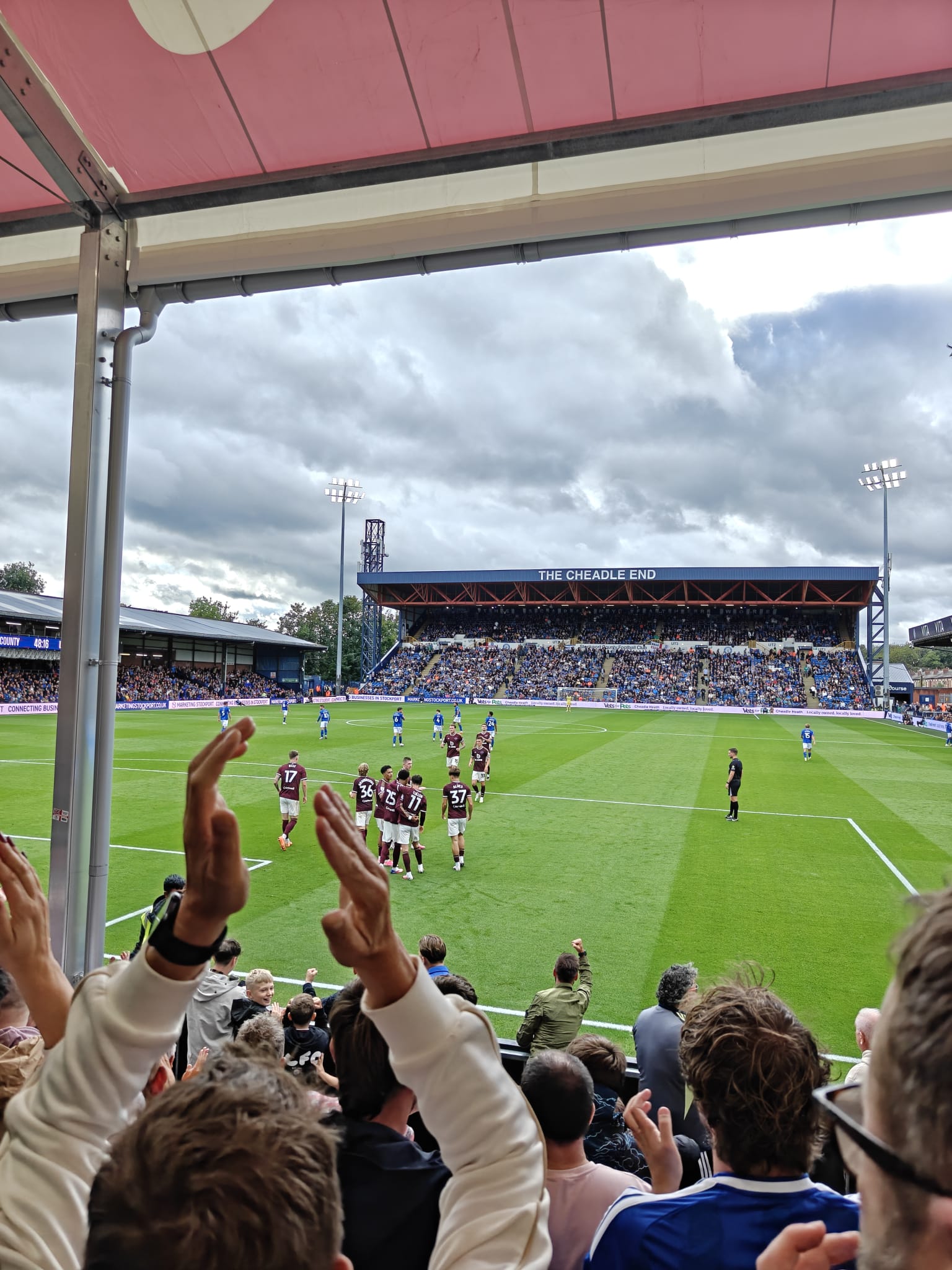
So often I’ve sat in my seat just behind the dugout at the King Power and listened to him shout “go with your runners!” or “win your duels!” – basics I would’ve hoped our players would’ve grasped by now. Most of the season seems to have been spent trying to get our press right, an odd decision given the players we have available. In the latter half of the season, the team have often looked confident and organised out of possession, but rushed and panicked when they win the ball back, with absolutely no confidence in the final third.
We are often criticised for having the worst squad in the WSL, or at least the lowest value squad. That may be so, but just chucking money at a load of superstars is no silver bullet – London City Lionesses have invested heavily in bringing in world-class players, but we still beat them twice. I don’t believe there is a sizeable gap between the quality in our squad and West Ham’s, but Rita Guarino arrived in January and got enough out of them to steer them to safety.
I don’t mean to keep comparing back to Miquel, but you only have to look at what she was able to achieve last season (our highest ever WSL points tally) with basically the same resources available (less, considering the injuries). She didn’t just put players on the pitch and will them to make things happen – there was always a wider philosophy and a meticulous gameplan.
Miquel is a very good football manager who is particularly skilled at making the most of very little resources – sadly, Passmoor does not seem to have that capability. It’s been said that apparently players felt disconnected from staff under Miquel, and are much happier under Passmoor – it’s a tricky balance to strike, but ultimately everyone enjoying themselves on the training pitch hasn’t translated to anything when it’s really mattered.
Jeremy Benson
I went to the eleven home league games this season, plus the playoff at Charlton. We started well with a gritty win against Liverpool. Our second win, against London City Lionesses, was in December, and put us ninth in the WSL table at Christmas.
And… we’ve lost every league game since then. Eleven in a row plus the playoff. This calamity has felt different from the parallel disaster of the men’s season, though. With the women, I’ve never doubted the players’ attitude, but there hasn’t been enough quality, confidence or leadership, especially after the departure in January of Janice Cayman, our experienced captain. The team seemed to start games on the back foot, almost as if they expected to lose, which they duly did.
At the start of the season, I hoped our attack would see us through. But in fact, while the defence hasn’t been too bad at home (we didn’t lose at the KP by more than two goals; let’s draw a veil over the away results), going forward we’ve struggled, only scoring 11 goals, barely half as many as last season.
The playoff felt like a grimly appropriate end to the season: at a sweltering, unhappy Valley we enjoyed the rare experience of holding our own for much of the game. But even though we had many more shots than Charlton, we couldn’t make them count, so we were forced to endure the agony of a penalty shootout.
Afterwards, many of the players were in tears, yet came over to talk to the fans. That felt far more human and authentic than the dutiful applause-for-the-stands you usually get when the men’s team is relegated. Strikingly, I could not see the manager anywhere as fans and players – I expect many have now made their last appearances for us – shared the sadness.
Indeed, nothing about this season reflects well on Passmoor or the hierarchy that appointed and stuck with him. After four seasons of steady progress we went crunchingly into reverse, with fewer wins, points and goals than in any previous WSL season. Without replenishing or developing the squad, let alone putting in place a strategy to develop it, the team has stagnated, and it feels frustratingly like the experience and effort of the last few years has been allowed to dissipate.
Who knows whether his predecessor would have done better, but – at risk of crying over spilt Miquel – it’s hard to see how she could have done worse.
Simon Birch
Rick Passmoor was never supposed to be leading this team. The sacking of Amandine Miquel practically invalidated all the preparation from pre-season, leaving Passmoor to work things out for himself. We saw no kind of joined-up tactical thinking and what ideas were there didn’t seem to progress over the season. He’s not been a good fit for the job but it was never a job for him anyway.
The big fear going into the season was the arrival of money bags London City Lionesses. Signing proper international players, ones that aren’t even past it yet was a bold move for a team new to the league. Most teams that had previously come up from WSL 2 were underfunded scrappers that Leicester were usually able to be less bad than. But the compression at the bottom caused by a rich new team was always going to be a problem and that’s exactly what happened.
We were able to sit back and absorb pressure and occasionally come out with a point and a few improbable wins. But this only seemed to work while Liverpool were simply atrocious. In January, we signed some proven WSL quality and experience and it looked sensible. But Liverpool were able to turn it on and those 1-0 or 2-1 losses suddenly became batterings for Leicester and we looked hopeless from then on. Relegation was a grimly predictable end to a downhill march of a season.