This has been a strange old summer, in a strange old year, in a strange old moment in history.
How do you preview a season with as wide a range of possibilities as this one? How do you talk about a team that has the potential to be multiple, diametrically opposed versions of itself?
That has been the conundrum engulfing us here as May stretched into June, July, and eventually into August.
In Why England Lose, Simon Kuper & Stefan Szymanski wrote about the concept of game theory in football, particularly the idea the perfect penalty taker was someone who didn’t know where he was going to put the ball when he ran up to take it. He could achieve pure randomness in his decision-making, the holy grail. If he doesn’t know where it’s going, how can the goalkeeper?
Seen from that perspective, maybe Leicester City have played a blinder. If we have absolutely no idea what we’re doing, how can you?
Over the summer, questions which would typically prompt a very simple response, such as “how many points do you have?”, have remained impossibly difficult to answer. We’re forced to stutter, take a deep breath and embark on two hours of ifs, buts, and maybes.
But over the last few weeks the new coaching group has channelled the power of nominative determinism to bring a badly needed sense of calm to the club. A month ago, things looked pretty bleak, with no manager, no transfer movement, and the owner on the brink of financial Armageddon back in Thailand.
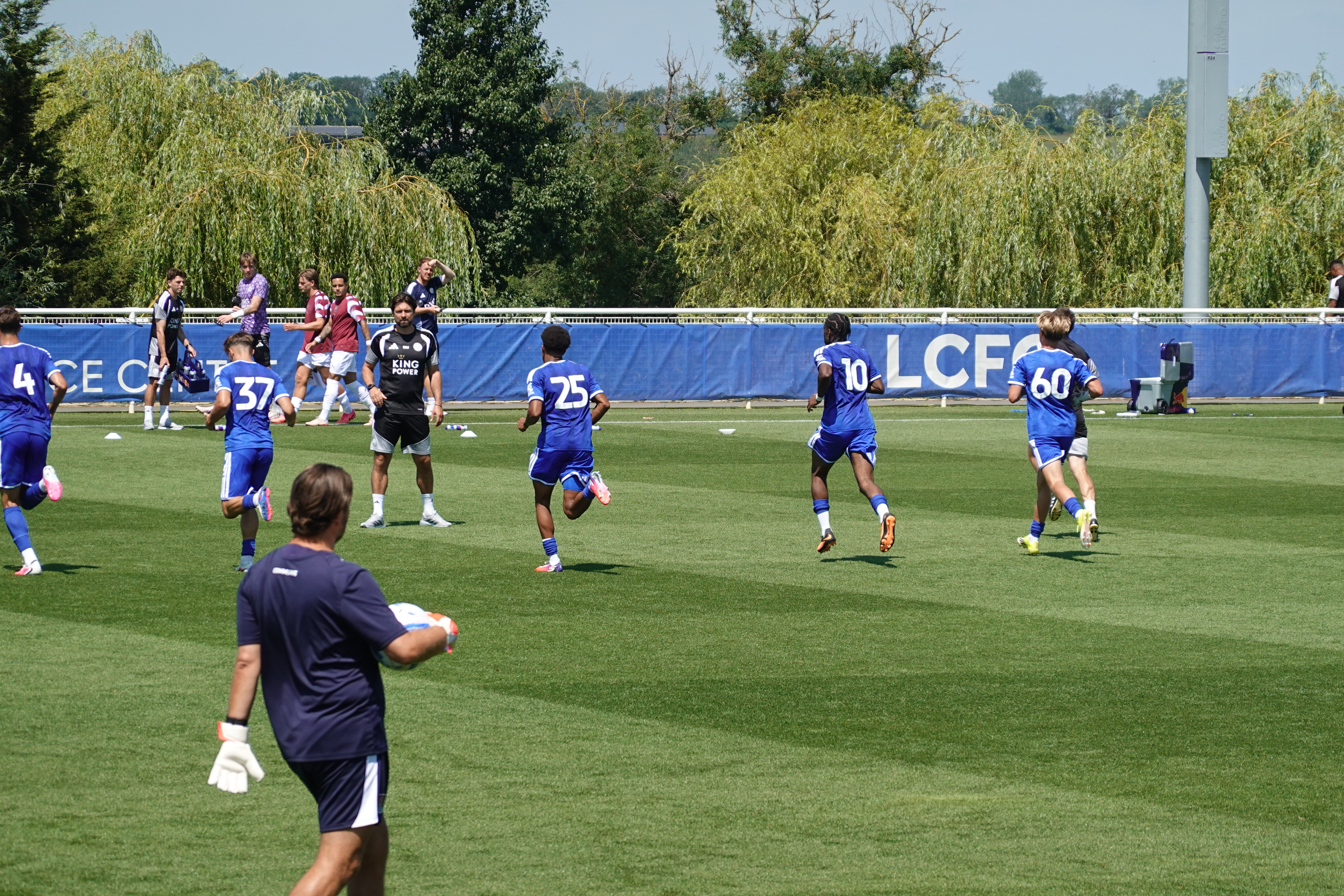
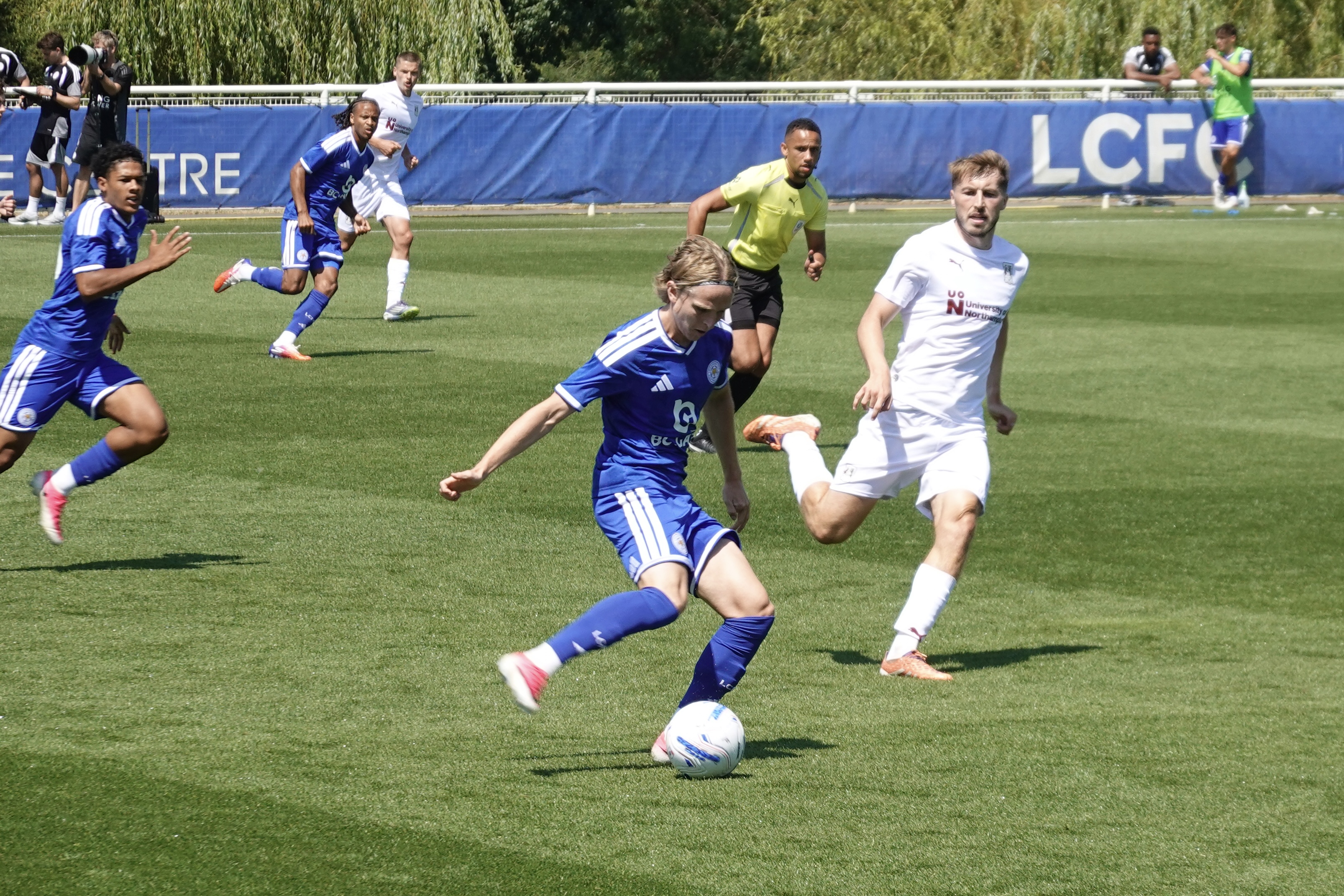
Now there is at least some movement in the right direction. It is already apparent what sort of football Martí Cifuentes wants to play, while he has generally backed up his positive noises about the academy by giving young players plenty of minutes across the four pre-season games he took charge of.
Added to the departures of Conor Coady and, imminently, Wilfred Ndidi and Mads Hermansen, we can start to see the shape of the squad coming together. Along with a hitherto very well hidden plan of action.
One of the most positive things about Cifuentes is the way he has taken an interest in the club’s history, and shown a desire to merge his own style with that of great Leicester teams of the past.
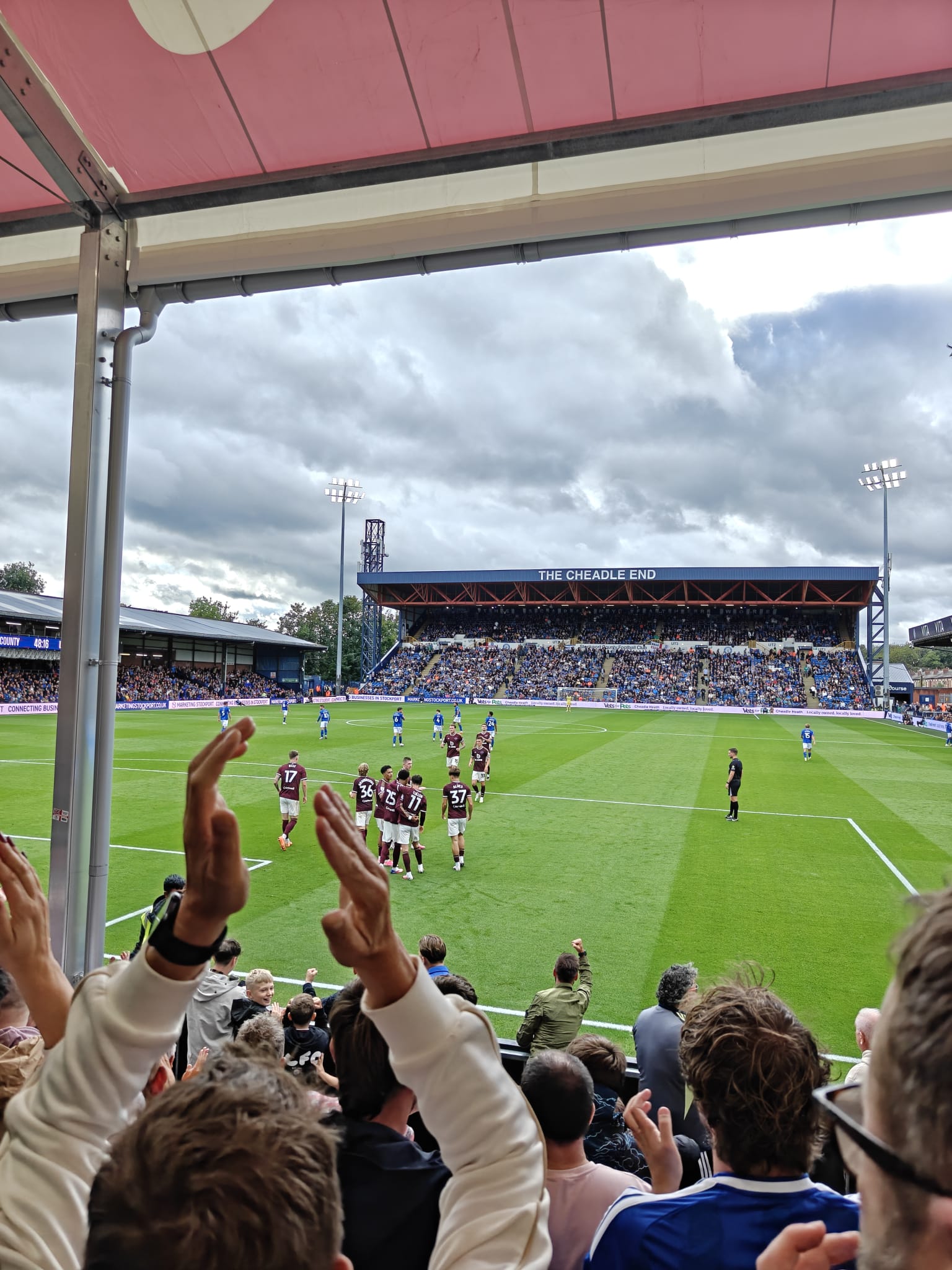
When he talks about intent, playing attacking football, breaking with pace, it all sounds fantastic. Watching Abdul Fatawu and Stephy Mavididi roast Fiorentina’s full backs last weekend was an intoxicating glimpse of what the Martí era might be like.
This could be Enzo Maresca’s Leicester with the Pass It Forward instruction on. More intent in and out of possession, more bodies into the final third. A high press, with an extra midfielder committing forward to help the front four win the ball back. Get into ’em!
Given we barely saw a shot in anger for months of last season, this is a tantalising prospect. This team could have the attacking power to destroy opponents at this level.
But then there are the nagging doubts, all sorts of pesky potential problems, the things that have torpedoed this set of players before.
Are they fit enough to play this way? Ruud van Nistelrooy and the eye test would suggest they weren’t last season. Cifuentes was hamstrung from the start on this front, given he missed the first fortnight of pre-season for no reason beyond the club’s inability to do anything in good time.
Is it even possible to play high intensity football across a 46-game season? What happens on those dreary Tuesday evening trips to Middlesbrough, when your legs are as heavy as the pitch? Is this going to descend back into Enzoball, with 80% possession and one shot on target?
Another potential landmine is the defence. There have been signs over the summer that their passing out from the back needs a bit of work. Whether a positional problem or a decision-making one, it’s something opponents are going to try to exploit, while FC Köln swept past Leicester’s statuesque back line with alarming ease at times. A lot of bad habits look pretty ingrained.
Two years ago, Leicester covered up those weaknesses by virtue of simply having far better individuals than everybody else. In a 1v1 duel, our guy is just better than your guy. Eventually that’s going to tell.
Right now, that’s the case again. On paper, Leicester have surely got the best team in the Championship. Tactics schmactics. Is that HMS Piss The League, back for more?
There are other parallels with the last promotion season too, when the idea that we would be historically good for the first half of the season was not the predominant view going into the campaign. A lot of the players are the same, the manager is cut from a similar cloth if, admittedly, with less of an aura about him.
Yet this season does feel different. Subjectively, the expectations are lower. Another bounce-back promotion would surprise people.
Assuming this isn’t all down to the prospect of a points deduction, is there an acceptance that this is a more tricky situation than it looks on paper? That the manager needs time?
Or, more likely, is this a mirage, and the knives are going to be out if Leicester don’t have five wins out of five by the end of August?
The obvious reason for a lack of confidence is the fact that a lot could change before the transfer window slams shut in a few weeks time.
Yes, this squad should walk to promotion. This squad. Whether we will have this squad for very much longer remains to be seen.
For now, we can probably assume Victor Kristiansen is going to join Coady, Hermansen, and Ndidi in the departure lounge. What happens beyond that is guesswork.
Based on the pre-season campaign, we can sketch out the current starting XI and reserves like this:

Stephy Mavididi, Bilal El Khannouss, and Abdul Fatawu make up a devastating attacking trio who simply never got the chance to play together in the Premier League. Across the rest of the pitch, Leicester could put out two separate sets of players good enough to get promoted.
Obviously, football is not as simple as that. Alongside the fact that any number of these players could leave in the next few weeks, there are various issues with the makeup and balance of the squad. Leicester could, for example, put out a more or less an entire XI comprised solely of right backs.
Then there are the more pressing problems: there’s an enormous amount of creativity in the team, but any wise man will tell you that Goals Win Games. Do we have enough?
You can rearrange the names “Jordan Ayew” and “Patson Daka” any which way you want, they are never going to form themselves into “guaranteed 20 goal a season striker, have a bit of that”, which is typically what you need to finish in the top two.
The midfield has plenty of question marks. Maybe Oliver Skipp is going to turn into the £20 million midfielder we signed last summer, maybe all Harry Winks needed was a change of manager, maybe Boubakary Soumare has very slowly turned the corner. Are all of these things likely to be true?
El Khannouss, for all the impression he gives of being a great player, remains a bit of an unknown. His Premier League efforts comprised a lot of style, not much substance. Can he recreate the impact Kiernan Dewsbury-Hall – who notched 12 goals and 14 assists – had two years ago, even if he sticks around all season? And if he doesn’t, can Will Alves do anything like that?
Finally, there’s the sheer number of players. The depth chart above doesn’t even include Ricardo Pereira or Woyo Coulibaly (or Bobby De Cordova Reid or Harry Souttar, for what it’s worth). Nor does it include youngsters like Olabade Aluko, who regularly featured in pre-season.
Ricardo is the most likely of those to feature when fit, perhaps in midfield as Hamza Choudhury seems to have leapfrogged his way into the starting XI. And possibly James Justin’s versatility means he could be the left back at times, as he was against Köln.
The reality is though that these types of players might be more name brand than genuine asset. They’re starting to look like progress stoppers. Some other names absent from that squad above are Louis Page, Jake Evans, Wanya Marcal, Michael Golding, and Sammy Braybrooke.
How do you give these younger players a chance with so many senior players on big money ahead of them? Dressing room morale as well as pure financial common sense means the expensive fringe players and backups need to go.
Even decent starters who are eating up minutes should be on the chopping block. These interchangeable individuals are in the way of any kind of genuine refresh. It feels like the same old players because it is the same old players. The only new signing is the back-up goalkeeper, there’s clearly no ability to bring any new blood until more are let go.
This ultimately feeds into the fundamental question ahead of this season: What are we trying to do?
Is the goal to get promoted at all costs, or is the goal to reset the financial situation and develop a potentially elite generation of academy products?
Such is the way of the world that the answer is probably to do all of those things at the same time. Based on the overall feeling of the club in 2025, though, you have to assume there is an acceptance that the second goal – fix the finances by bringing through this group of young players – has to take priority.
In that case, there’s a huge amount of work still to do. There’s a difficult balancing act to be struck, because as great as Jeremy Monga and his ilk might be, there’s a limit to the amount of minutes you should be giving 16 and 17 year olds. At the same time, the club cannot get itself into another situation where people like Alves are unable to play because the manager is giving minutes to Bobby Reid instead.
Cifuentes’ great challenge is going to be managing this potentially very difficult transitional period while doing well enough to keep the club together.
If the sort of squad turnover we’re talking about ends up taking place over the next month, then the reality of what we can achieve has to be adjusted accordingly.
As the land lies right now, anything less than promotion would be a pretty dismal effort, given the depth and quality of players at our disposal. We have seen before that the gulf between divisions is big enough for us to brute force the division with the same team that looked apocalyptically bad in the Premier League.
By September, though, we might look completely different. Then it might be a young team with the potential for a playoff run. We might also be dealing with some kind of points deduction to further complicate the situation.
How much of a stomach does everyone have; the players, the fans, the owners, for a rebuilding season that might be a bumpy ride? How long can the calming effect of bringing Monga on after 80 minutes last if things get scrambled?
That is the great unknown. If the entirely thinkable happens on Sunday, and the narrative leads Sheffield Wednesday to a result on the opening day, are we right back to where we were in February, with outrage on the Kop and protests against the board?
Because we all know the only thing that has changed about this club this summer is the manager. Yes, there are signs the playing staff might be changing a little, and the odd vague impression of the club opening up ever-so-slightly, improving on the social side and engaging a tiny bit more with the fans it has treated so poorly.
There’s not a lot else. Everyone else on the leadership side is still in-situ. There has been no communication from that leadership team. Once again the manager is has been carefully positioned directly into the firing line. We are all being asked to take a giant leap of faith that everything is going to be fine.
Does Cifuentes have enough personality, self-assurance, and raw ability to deal with this?
In a way that is the most exciting and interesting thing about the season. It feels different, we genuinely don’t know what to expect. We might walk the league again, or everything might collapse in on itself.
That alone is far more exciting and interesting than 12 months ago, when were staring at a slow, inevitable death march to relegation. This time infinite paths stand before us, leading the way to triumph, disaster, and everything in between.