Burnley’s signing of 39-year-old Jamie Vardy provided one of many talking points this week. Indeed, in any other week, Leicester City’s greatest ever player preparing for his first stint in English league football away from LE2 would have been huge news.
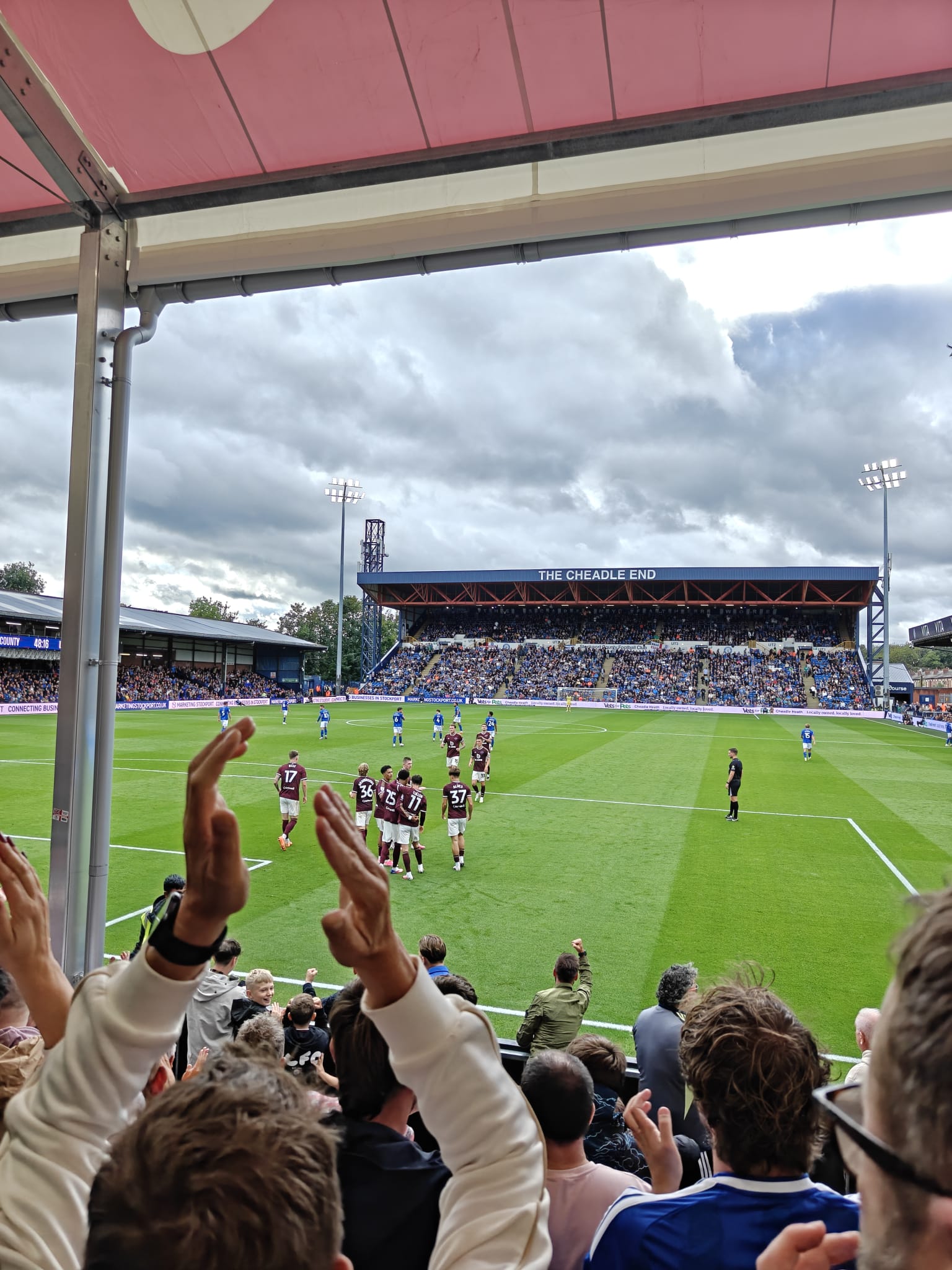
But we have our own worries, with what has unfathomably become a daunting trip to Stockport on Saturday followed by the deadline for offers from interested parties to buy the club on Monday.
Last weekend’s 4-0 defeat at home to Oxford United saw the national media take a brief glance away from the Premier League table to peruse the Football League standings. They had to run their finger a long way down the page before they found the 2016 Premier League champions in the lower reaches of the third division.
As one former colleague, an Everton fan, said to me this week in all seriousness when chat turned to football: “sorry, which league are you in again?”
At least until there’s a prolonged upturn in fortunes, this club is doomed to suffer 2016 as an eternal benchmark. On Talksport, Jim White opened a discussion about Leicester’s current situation with a line that wasn’t far from Troy McClure on The Simpsons, akin to “You may remember Leicester City from such seasons as 2015/16”.
Faced with the current woes, we leaned into nostalgia this week, asking on Instagram which former Leicester player you would bring back at their peak to help the current City side. Vardy featured several times but one of the most popular responses was Wes Morgan.
That tells you something about where our heads are at as a collective fanbase. Monday’s BBC Radio Leicester podcast was titled “Where are Leicester’s real leaders?”
Looking for leaders
With so much young talent at Russell Martin’s disposal, it begs the question: where, in a team that wants to play possession football, do you put experience and leadership?
At centre-back, an old head might be able to survive a high line if his positioning is good enough, even if his legs have gone. In midfield too, if he’s smart enough to recycle the ball early and let younger legs do the running around him, an experienced player can dictate the tempo without needing to make the bursting runs himself.
In attack, though, it’s plainly not a good idea. The modern front line needs players to press first, sprint in behind second and make repeated high-intensity actions for ninety minutes with no let-up. It’s the position decline gets to first, because there’s no way to hide a striker who can no longer make the run.
Jamie Vardy was the exception rather than the model. He worked past 30, and long past it, because Leicester built an entire system around isolating the one thing age couldn’t take from him: the timing of a run in behind and the finish that followed it.
Take away the graft of pressing and take away the need for him to create anything from a standing start, and you’re left with pure instinct, which doesn’t degrade the way pace and legs do.
Whether counter-attacking under Claudio Ranieri or building more gradually under Brendan Rodgers, Leicester built systems to suit the most effective striker the club has ever had. Vardy was also, let’s face it, a physical freak of nature who you can’t compare to our current veterans.
The first time Leicester truly had to think about replacing Vardy was the summer of 2024, when there was doubt about his final contract renewal. The result was an incredibly damaging transfer market, in ways we’re still living with now.
Premier League lessons
After living the high life with one experienced striker, we’ve been held hostage as an attacking force by two more.
One moment we were smoking a cigar on an open-top bus with Enzo Maresca. The next we were bundled into the back of a van and driven around by Jordan Ayew for two years before being dumped in an out of town shopping centre somewhere between Milton Keynes and Bletchley.
The worry now is that Bobby De Cordova-Reid bundles us back in and sets off on a tour of provincial towns for the following nine months.
One of the main lessons any Leicester fan should have learned over the past few years is that, when it comes to new signings and contract renewals, today’s good lad to have around the dressing room is, three years on, still somehow making it into the team despite being part of the reason we’ve tumbled through the leagues.
That applies to Luke Thomas as much as Bobby De Cordova-Reid. But it was also a major concern this summer when Wes Burns turned up on a three-year-contract just ahead of his 32nd birthday.
Both De Cordova-Reid and Burns started in the front four against Oxford last Saturday. Both performed poorly. Both were withdrawn early. Only for Russell Martin to blame himself for taking experience off in favour of youth as Leicester tried to find a way back into the game just to be punished.
De Cordova-Reid and Burns both have historic goalscoring pedigree, which is another reason they’ve been selected to play in a team that hasn’t proven it can score goals.
But can you play a 31-year-old and a 33-year-old together in attack in the modern game?
Nobody in the Premier League is doing it. Not even close.
Of 75 players who started a Premier League game last weekend in a front three or four (or five in Manchester City’s case), only 3 were aged 31 or over: 34-year-old Thomas Meunier for Sunderland and 31-year-olds Bruno Fernandes and John McGinn. Being the reigning PFA Footballer of the Year or having lifted the Europa League four months ago probably gets you a pass, while Meunier is a defender who was played out of position.
Every top-flight club, whether by design or by market pressure, has worked out that age and the modern front line don’t mix.
Prime of life
De Cordova-Reid and Burns aren’t the only reason Leicester have scored just four goals in the first five league games (one of which was scored by Burns).
Faced with a long to-do list, the club has struggled to bring in players in their prime. While there is always a clamour for youth, experience doesn’t have to be in the shape of a 33-year-old utility attacker or a 36-year-old goalkeeper.
In fact, of the 16 players who played a part against Oxford, there were only three between the ages of 24 and 30: Harry Souttar, Luke Thomas and Emil Riis.
A tentatively promising victory over Plymouth seemed like something from a bygone era as Oxford rattled in their fourth goal. The mood this week has plunged. Suddenly, the signings made on deadline day hours after the Plymouth win have the feel of providing last chance saloon for the Martin experiment.
In the 27-year-old Warren O’Hora, Leicester did sign one player who slots straight into the middle of that 24-30 bracket. We can only hope he slots straight into the team to great effect.
John Lundstram is another deadline day signing who must have watched the capitulation against Oxford and seen the impact he could have on this side, anchoring an exciting but lightweight midfield.
Conor Chaplin is another who needs to get fit and step up. It’s fair to say Leicester fans haven’t got the same faith in Liam Cullen to come good, but never say never.
These players should be providing the spine of the side by now. They were either recruited late, injured or have badly underperformed so far. If they can turn that round and offer the right kind of experience in the right areas of the pitch, Leicester’s season might not be a write-off after all.
Their presence is a reminder that Martin can’t say he doesn’t have options. The squad is looking increasingly bloated and a large number of potentially effective players won’t make the matchday options each week.
As Jamie Vardy starts all over again at Turf Moor, we hit the road north twice ahead of a long break from league action.
Those trips sandwich a takeover-related deadline on Monday that will eventually decide who has the opportunity to sort out this mess – and help shape whether Russell Martin will be around to oversee it all on the pitch.