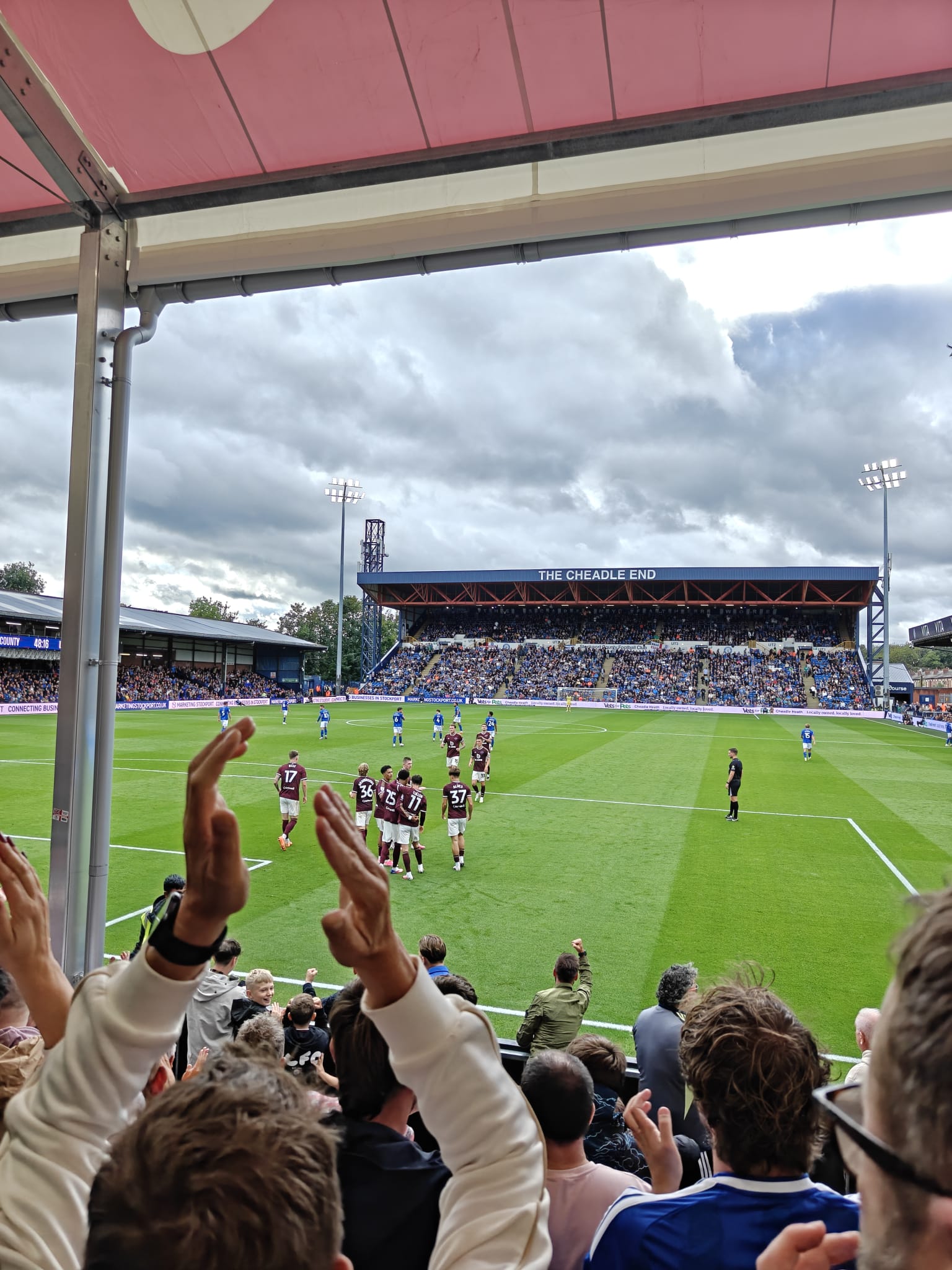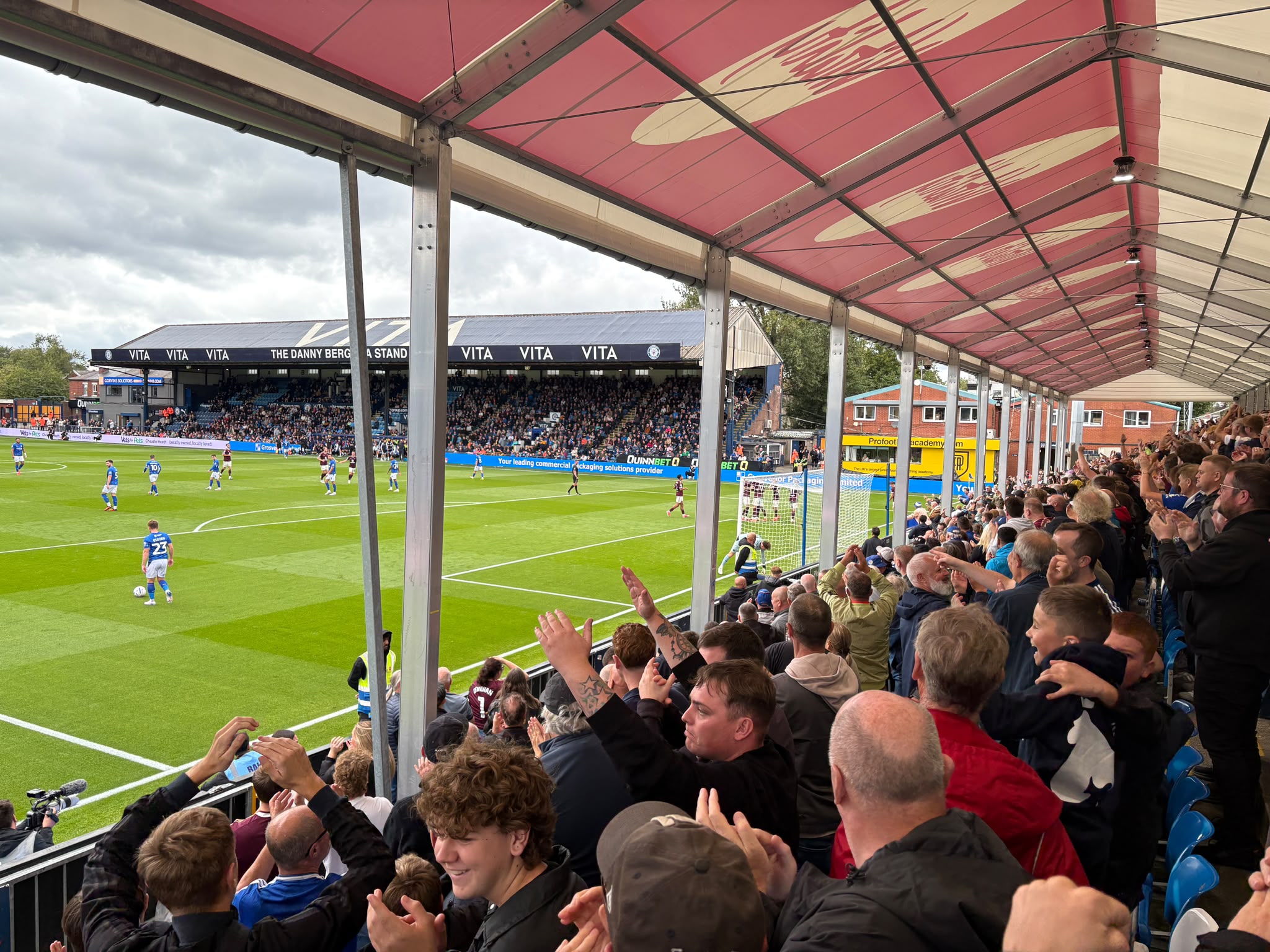
By the end of the latest make-or-break game in Leicester City history, we were all even more confused than when we started.
What, for 56 minutes, looked like a clear measure of redemption for Russell Martin, became a chaotic encounter in which the Foxes came away fortunate to have avoided a doomsday scenario.
That they dodged it is thanks in part to the ruthlessness of three new signings, all of whom have stepped down a level to come here, and the initial selection decisions Martin made. And in part to some absolutely mad behaviour on the part of Stockport County attackers.

role Reversal
For almost an hour, this was comfortably Leicester’s best performance of 2026. Low bar as that is, it was the first time in a long time we’ve seen anything resembling a cutting edge.
It may not be a coincidence that it came against a side who were willing to play themselves. Leicester have run into no end of problems against sides who sit back, deny space, and then pounce on the inevitable mistakes going the other way. The more impressive results and performances have generally come against better sides, who aren’t willing to adapt their game to the sort of obvious instant win tactic that everyone else uses.
Stockport are second only to our brave boys in terms of average possession. To be fair, their dedication to this approach paid dividends in the second half. Before that, their gameplan left them exposed to the sort of goals we don’t usually score.
Three of the four came from Leicester playing the ball directly into or beyond the forward line. The fourth from a corner that was earned in large part by Liam Cullen winning the ball off Stockport’s left back. We usually concede goals in this manner rather than score them.
They were good goals as well. Louis Page had a huge impact with a trio of assists, but he was aided by a forward line that finally looks to have a bit of firepower. Cullen’s swivel and shot for the opener was superb, while Emil Riis had one and a bit chances and came away with two goals.
Martin deserves credit for the choices that allowed this to happen. Very few people would have chosen Cullen, even fewer in a nominal wide role. In reality he played more like an inside forward, allowing Jayden Joseph to fly up the right wing. While Joseph didn’t have a huge impact going forward, this allowed Cullen to roam in central areas. He was up with Riis when the striker had an early header saved, then essentially up front to receive Page’s pass and score the opener.
Cullen’s inclusion reflected a broader return to experience after what happened against Oxford. Whatever your broader views of Martin and the idea that he threw the players under the bus, it is true that the team that collapsed last week was incredibly inexperienced and it was inevitable we’d see a reaction here. At least Martin chose a combination, crucially made up of players who Leicester actually own. Five academy graduates started alongside an experienced core, none of the loanees made it. We can quibble with individual picks but this is at least a sensible approach that benefits our club rather than Brighton.
He was aided by the way the experienced heads showed up. Lundstram and O’Hora were tidy and effective until they tired, while Riis showed how much Leicester have missed a player with genuine ruthlessness up front.
As Riis was burying his chances there was a small feeling of abject frustration at how long it has taken to rectify this wrong. The difference having a proper striker leading the line makes to the rest of the team is as astonishing as it is obvious. As good as Page’s ability to take the ball on the turn and pick out a pass is, these flashes of inspiration have been going to waste time after time. Often, there’s not even been a chance at the end, either because there’s no one up front or the movement hasn’t been good enough.
Riis brings a physical presence to the forward line but he also simply plays the position properly. He is a pretty generic Championship forward. Like with Danny Ward during the first Premier League relegation, signing a completely normal, average football player in a position of need would likely have kept Leicester up a year ago. We proved incapable of that, and here we are: needing one to bail us out at Stockport.
Reverting to Type
And make no mistake, Leicester were very much bailed out here. By Riis’ goals, by Page’s creativity, and by Stockport’s inability to land the killer blow.
For all the first hour was good, the latter half hour was not. An extreme fragility in defence remains, to the point that we are never safe. When Lundstram headed in the fourth, this game was dead and buried. It remained so for five minutes, at which point some alarming noises started coming from inside the tomb.
Last week, Leicester conceded twice in three minutes on the hour, leading the manager to utter the infamous line that “we had five kick offs today and three of them ended up with a chance on our goal”. This week it happened again. In a 15 minute spell, Stockport scored two goals and had another two disallowed, the second thanks to a moment of historic stupidity from a player who touched a ball that was going in anyway.
There is a collective fragility that can only be cultural at this point. We have been giving up shots inside the first minute of halves and conceding in bunches for a long time. Even the team that experienced this collapse was significantly different to the players who were on the pitch for the collapse a week ago – Christian McFarlane, Tommy Watson, Harry Howell, and Kamari Doyle replaced by O’Hora, Cullen, Lundstram, and Will Alves.
How much of the fragility is purely mental and how much is down to tactical or technical mistakes is difficult to say. Almost all the goals Leicester concede are avoidable, and they have a habit of pulling out a doozy at the worst possible time.
Stockport’s first goal, to equalise midway through the first half, was a pretty poor one to concede. Martin’s tactical tweak to allow Joseph to push up worked for Leicester’s goal, but was exposed for the equaliser, as half the team was caught way ahead of the ball in transition. Luke Thomas then let his man shoot through him far too easily.
The second was worse, a sloppy foul given away by Harry Souttar and then Alex McCarthy caught horribly out of position from the resulting free kick. Then Souttar and Thomas combined to make a horlicks out of a left wing cross for the third.
Thomas feels like a lost cause. After a brief foray to centre back, where in some ways he looked more impressive despite being part of a defence that shipped four to Oxford, he was back on the left here. Predictably, he was put under massive pressure all game, and was very fortunate to have only cost the team one or two goals. One of his beatings should have brought the equaliser, when Jason Adigun blazed an absolute sitter over the bar.
There were some rumblings before kick-off that McFarlane was left out for non-footballing reasons, though Martin said afterwards that it was simply tactical. This feels true, given the way he shifted the shape for this game, with Thomas tucked in on the left to balance out the more advanced right back. But Thomas is a prime suspect as we search for the reason why Leicester’s defence has been so bad for so long.
Beyond the individuals, there is clearly a tactical problem in the sense that the plan breaks down as soon as Leicester come under pressure. Possession is meant to be a defensive tactic as much as an offensive one: dominate the ball and then press hard to win it back. Once you’re ahead, you can play the sort of slow, passing football that we see so often because you’re taking the sting out of the game.
What we often see instead is a complete inability to maintain possession as soon as we come under pressure. Leicester had barely any of the ball once Stockport’s comeback started. As much as this is credit to them – they played some very nice stuff! – the risk/reward balance is out of whack if we can only keep the ball when the other team doesn’t want it.
It’s early days for Martin, if not for this particular tactic. But he needs to solve this issue. With a relatively experienced team, a comfortable lead, and a style of play that demands you keep the ball, this should have been a comfortable win. If you’re resorting to defending a siege every time you go ahead then something has gone wrong.
Baby Steps
In the end it was a win. A vital one at that. The mental state of the club had Leicester failed to see it out doesn’t bear thinking about.
One win doesn’t bring stability and a win like this certainly doesn’t answer all the questions we have about Russell Martin and many of his players. Some of what he said after the game was strange – such as waxing lyrical about how Cullen and Riis had gone “a long time” without football. Two players whose last game was 11 and 7 days ago, respectively – and he continually doesn’t help himself in this respect. It’s also going to take time to wash off the stink of last week’s defeat, especially at home.
This result at least buys him some time to start doing that. And it was mad, fun, and exciting, as well as hilariously poor at times. There’s something to say for that. Still never boring.